Small business owners hear about SEO and PPC all the time, and a lot of the advice out there makes it sound like you have to pick one side and run with it. That is usually not the smartest move. SEO and PPC can both help your business grow, but they do very different jobs. One builds momentum over time, and the other can create quick visibility when you need it. The real question is not just which one is “better.” It is which approach fits your goals, your budget, your location, and the kind of customers you actually want to attract.
In this article:
-Use local SEO for steady visibility in Boone, NC and nearby markets where trust and repeat search exposure matter.
-Use PPC for faster clicks and lead opportunities when you need immediate traffic or short-term campaign results.
-Build long-term small business growth with SEO, while using PPC strategically for targeted boosts and testing.
Kingdon Marketing helps increase views and conversions on your website with SEO. Check out services and contact us when you’re ready to increase revenue for your small business.
Why This Comparison Matters for Small Businesses
For a small business, marketing dollars need to work hard. You do not have time to throw money into random ads or publish content with no strategy behind it. You need leads, calls, bookings, and sales. That is where understanding SEO versus PPC becomes important.
SEO helps your website and online presence show up naturally in search results. PPC, or pay-per-click advertising, helps you buy visibility faster through paid ads. Both can be useful, but they work in different ways and create different kinds of results.
When it comes to small business marketing, the best decision usually comes from understanding how each tool supports your bigger business goals.
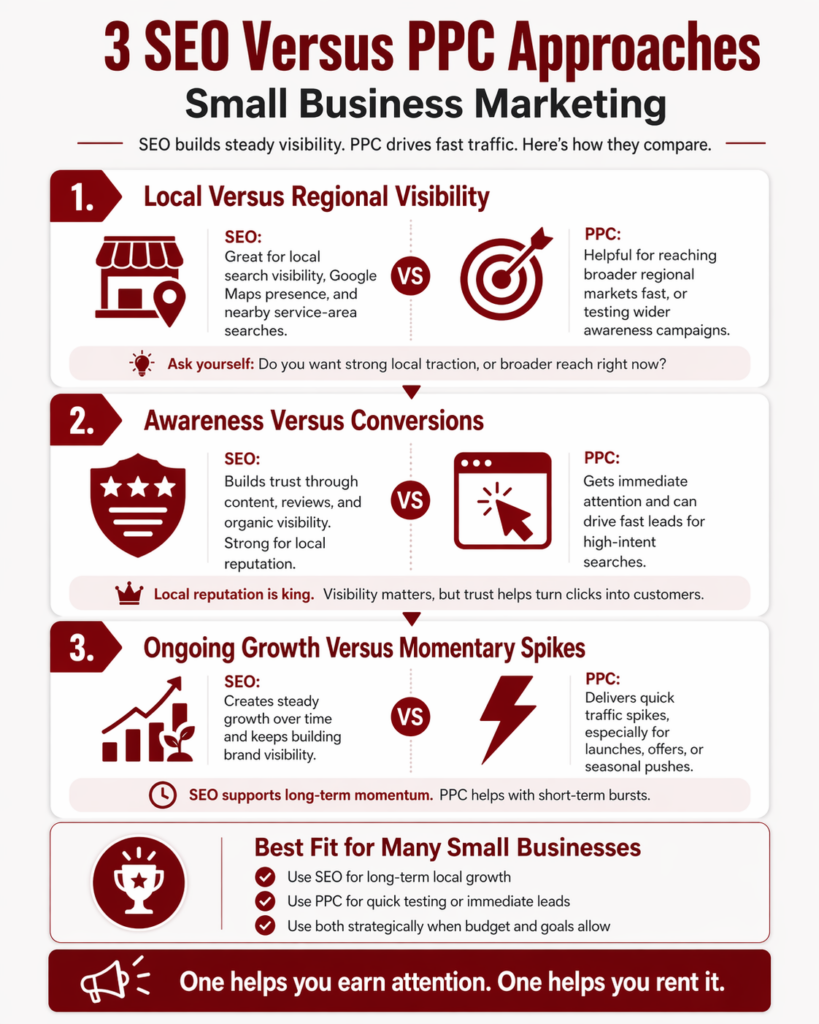
1. Local Versus Regional Visibility
The first big difference between SEO and PPC is how they support visibility across your target area.
If you are a local service business, local SEO can be incredibly powerful. It helps you show up for searches tied to your town, service area, or nearby communities. Think about phrases like “plumber near me,” “family dentist in Boone, NC,” or “best coffee shop in Blowing Rock.” Those are the kinds of searches that often lead to real action.
SEO helps build that visibility through things like:
- Service pages for each location
- Google Business Profile optimization
- Reviews and local trust signals
- Blog content tied to local questions
- Website structure that supports nearby search terms
PPC can also help with local targeting, but it tends to work best when you need faster reach or want to target a broader region on purpose. That could include surrounding counties, nearby cities, or a larger service footprint. Ads can put you in front of people quickly, but once the budget runs out, that visibility disappears too.
If your goal is nation-wide awareness, PPC may help you test markets faster. If your goal is to become a trusted local option in your area, SEO often creates stronger long-term traction.
2. Awareness Versus Conversions
A lot of business owners think more visibility automatically means more business. Not always.
There is a difference between being seen and being chosen.
PPC can be great for immediate attention. It can place your business at the top of the page for important searches, especially when competition is high. That can absolutely drive clicks and lead opportunities. But those clicks do not always turn into customers if people do not trust what they find after landing on your website.
That is where SEO has an edge. Strong SEO is not just about rankings. It helps shape your reputation. A well-optimized website, strong local content, helpful blogs, a polished Google Business Profile, and consistent reviews all work together to make your business feel credible.
Local reputation is king. People want to know who you are, what you do, where you work, and why they should trust you. If someone sees your business multiple times in organic search, finds helpful content on your site, and notices good reviews, that trust builds naturally.
PPC can absolutely support conversions, especially for high-intent searches like “emergency roofer near me” or “book HVAC repair today.” In those cases, people may be ready to act right away. Still, SEO often helps close the gap by making your business feel established before the click even happens.
A smart small business often uses PPC for immediate lead opportunities and SEO for the kind of brand presence that keeps conversions coming.
3. Ongoing Growth Versus Momentary Spikes
This is one of the clearest differences between SEO and PPC.
PPC can create traffic spikes. That is helpful if you are launching a new service, promoting a seasonal offer, or trying to get fast data. You can turn ads on, bring in visitors, and see quick movement. That speed is useful. It can also be expensive, especially if competitors are bidding aggressively in your market.
SEO moves slower, but it builds something more durable.
A strong SEO strategy helps your business grow steadily over time. One optimized service page can keep working for months. One strong blog post can bring in traffic again and again. A well-built local presence can increase calls, clicks, and brand recognition long after the original work is done.
That does not mean SEO is “set it and forget it.” It still needs attention, updates, content, and technical support. But unlike PPC, the value does not disappear the second you stop spending.
SEO gives steady brand growth. PPC gives quick bursts. Both have a place. The key is knowing which kind of momentum your business needs right now.
So, Which One Should a Small Business Choose?
That depends on your timing, goals, and budget.
If your business needs leads this month, PPC may help you move faster. If your business wants long-term visibility, trust, and stronger local positioning, SEO is often the better investment. For many small businesses, the strongest strategy is not SEO or PPC. It is knowing how to use both without wasting money.
A few simple examples:
- A new business may use PPC to get early traffic while SEO builds up.
- A local service company may focus heavily on SEO to dominate nearby searches.
- A seasonal business may use PPC during peak months and SEO year-round.
- A business with a limited budget may prioritize SEO because of its long-term value.
The best approach is the one that supports real business growth, not just more clicks on a report.
Final Thoughts
SEO and PPC are not enemies. They are tools. The real win comes from using the right tool at the right time.
If your small business wants stronger local visibility, more trust, and steady growth, SEO is hard to beat. If you need immediate traffic, quick testing, or a short-term push, PPC can be a strong addition. The mistake is treating them like they do the same thing. They do not.
One helps you rent attention. The other helps you earn it.
For small business marketing, that difference matters a lot.
Contact us today to get started!
Other articles to Checkout:
- 7 Key SEO Factors for Boosting Small Business Sales
- 5 Smart SEO Moves for Immediate Small Business Website Visibility
- 9 Must-Know SEO Basics for Small Business Entrepreneurs
- Is Local SEO Dead? Here are 9 Reasons Why It’s Still Relevant
- You Launched a New Website, But Is It on Google Yet? How to Check (and Fix It)
- 7 Ways to Market Your Company That Aren’t TikTok, YouTube, or Traditional Advertising